
Cyerra Latham: A Journal of Craft, Growth, and Opportunity
American craft means more than honoring the past. It means investing in the people who will carry it forward.
This month, we are proud to highlight Cyerra Latham, a recent SCAD graduate whose three-month sponsored training opportunity at Project Threadways/Alabama Chanin became something even more meaningful: a pathway into long-term work, deeper skill-building, and creative belonging.
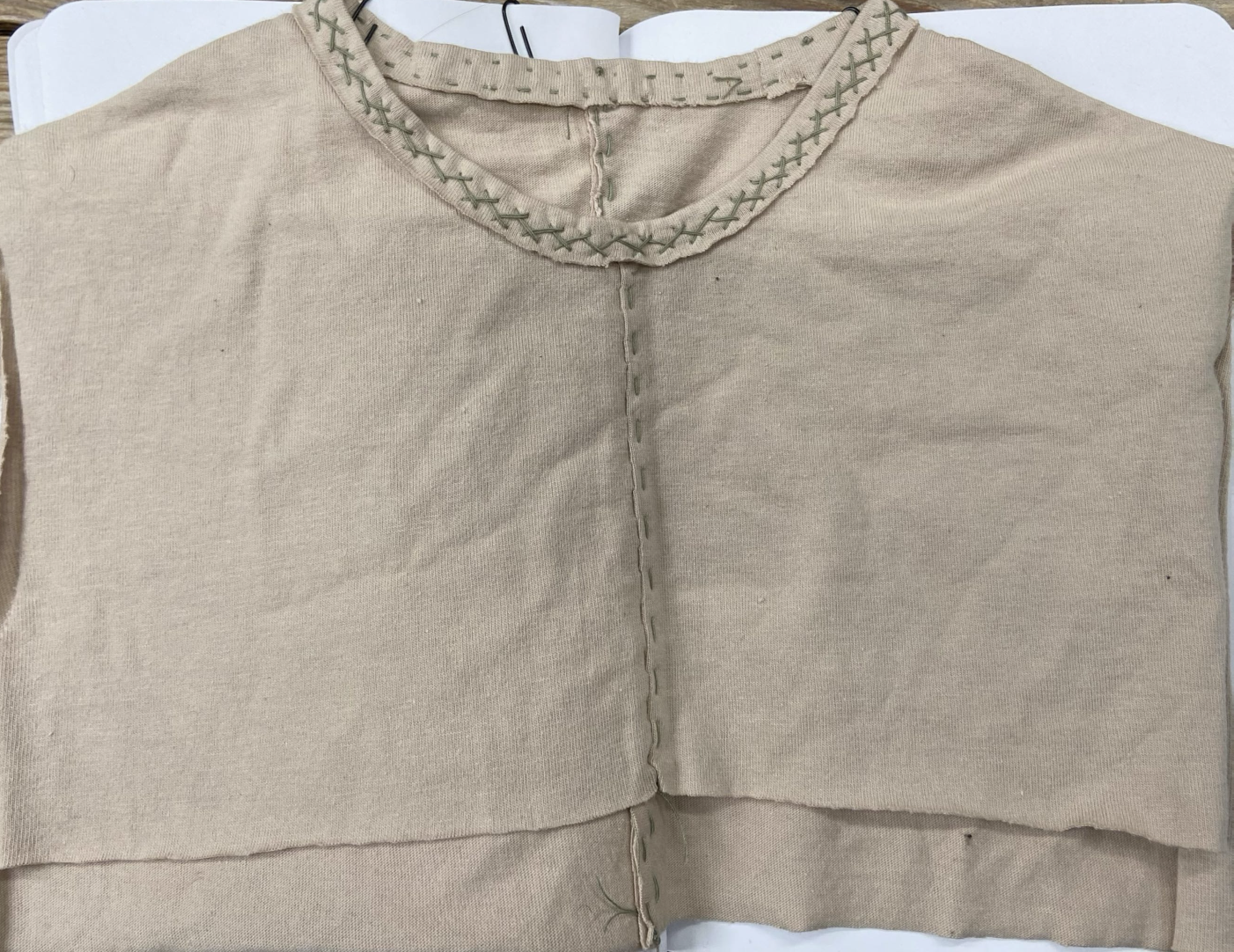
Based in her hometown of Florence, Cyerra entered the program with curiosity, discipline, and a clear desire to learn. Throughout her training, we invited her to document the experience through a personal journal. What she created is not only beautiful, but deeply moving: a record of what it means to learn with your hands, grow through process, and find your place inside a craft tradition.
Today, we are thrilled to share that Cyerra is now employed by Alabama Chanin. Her journey is a powerful reminder that when we invest in training, access, and local opportunity, we are not just preserving skills, we are helping build futures.
“Hand sewing is meditative, humbling… stitches demand presence, you cannot rush.”
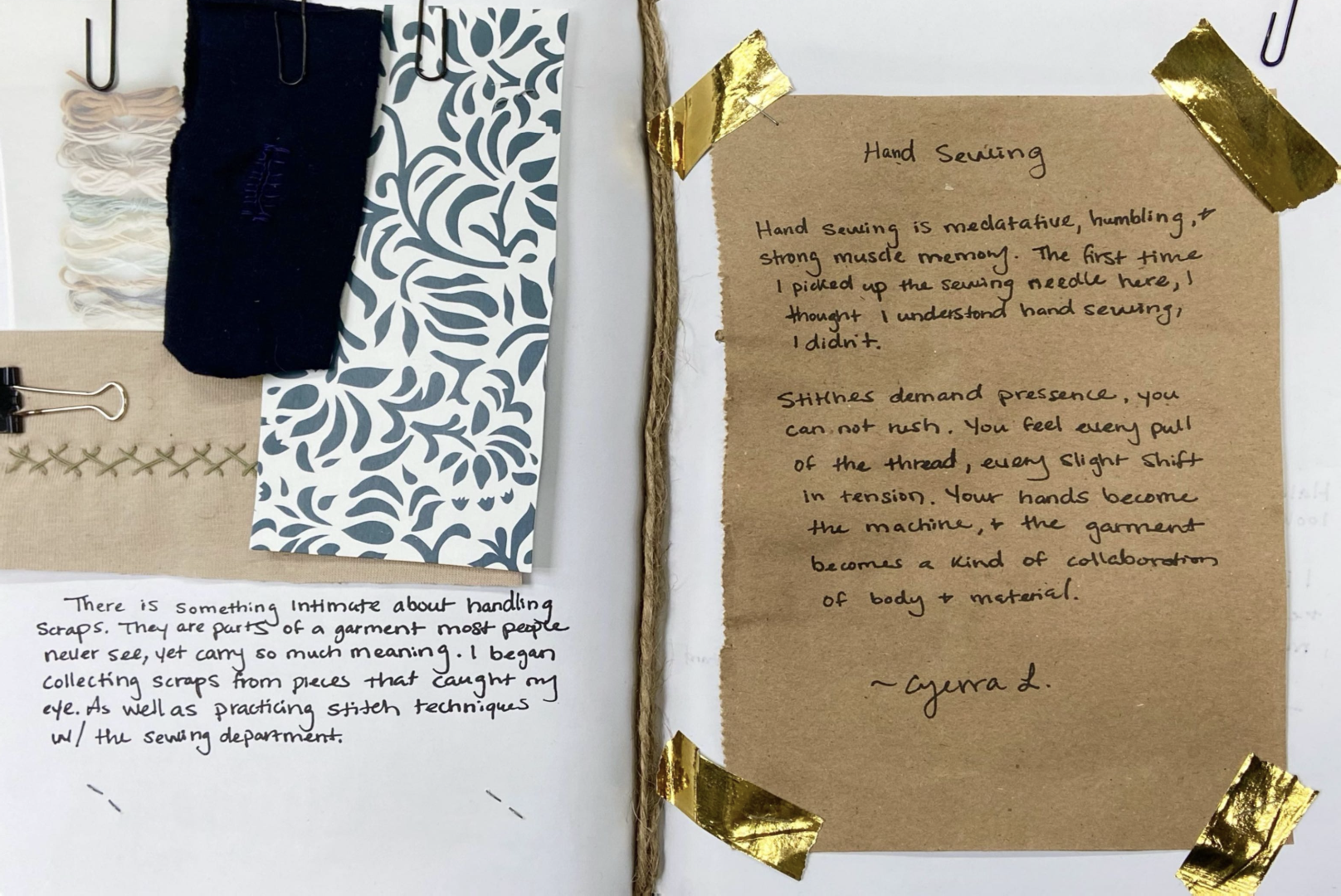
One of the strongest themes in Cyerra’s journal is the intimacy of making. Early in her experience, she reflected on hand sewing not simply as a technical skill, but as something far more embodied:
That reflection captures so much of what makes craft worth protecting. In a culture defined by speed and disposability, she encountered a different rhythm, one rooted in patience, attention, and repetition. She also began collecting fabric scraps from the studio, writing that these small remnants held meaning because they were “parts of a garment most people never see.”
Her journal reminds us that craft is often built in the quiet, overlooked moments: a seam, a scrap, a practiced hand, a second attempt.
As the weeks unfolded, Cyerra’s reflections began to shift from observation to transformation. Halfway through the training, she wrote:
“I realized I was looking at design differently.”
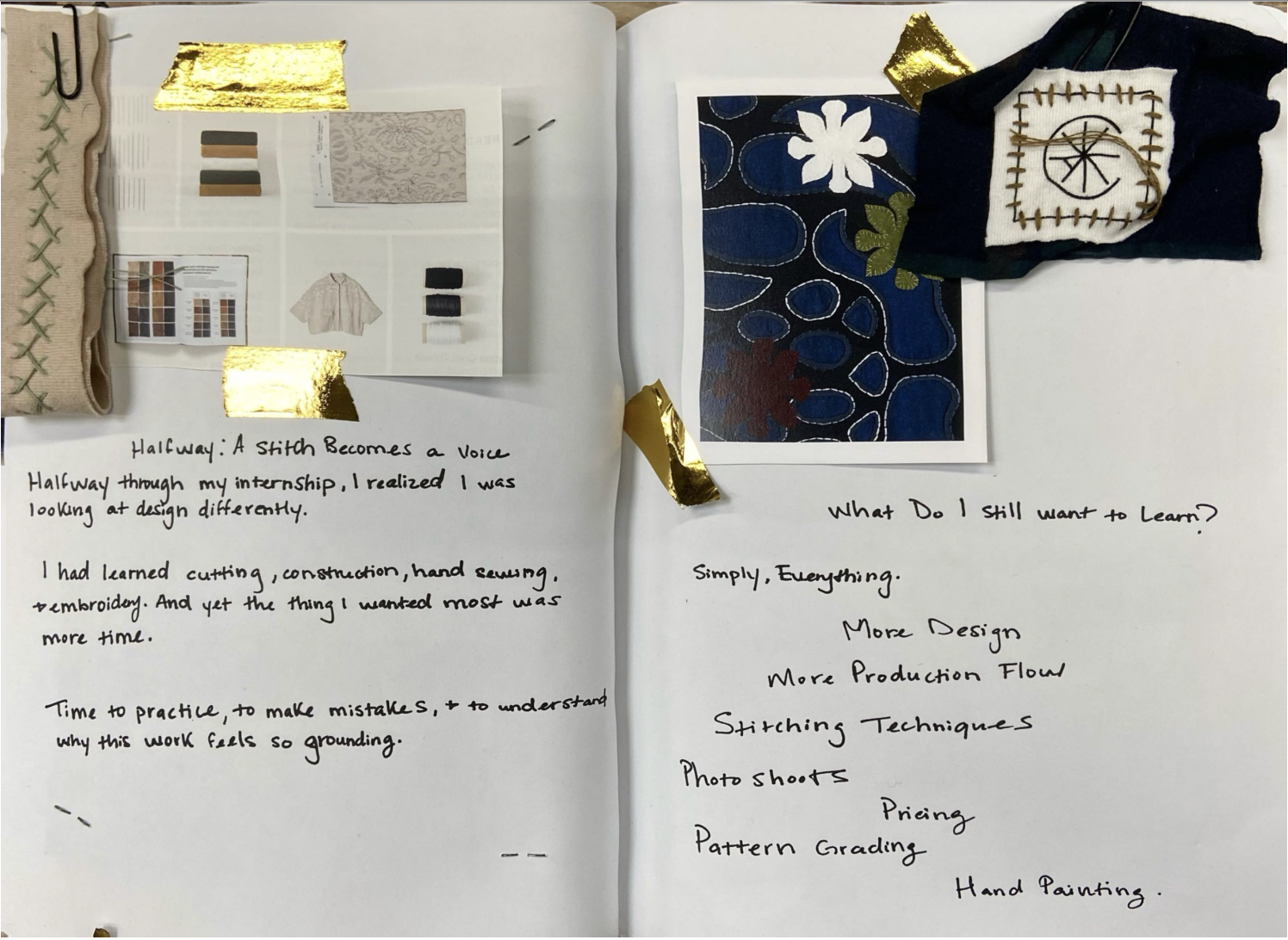
She had already learned cutting, construction, hand sewing, and embroidery, but what she wanted most was more time. Time to practice. Time to make mistakes. Time to understand why the work felt so grounding.
This is exactly why opportunities like this matter. Skill does not happen instantly. It requires space, mentorship, repetition, and trust. Cyerra’s experience shows what becomes possible when emerging makers are given the time and support to deepen their craft in a meaningful environment.
One of the most moving moments in the journal came when Cyerra learned that a piece she had sewn was heading to Paris Fashion Week. She described the feeling as unforgettable:
“To be sending work across the world… I stitched that piece with everything I had, putting myself in every seam.”
She went on to write:
“This was proof that slow craft can create big impact.”
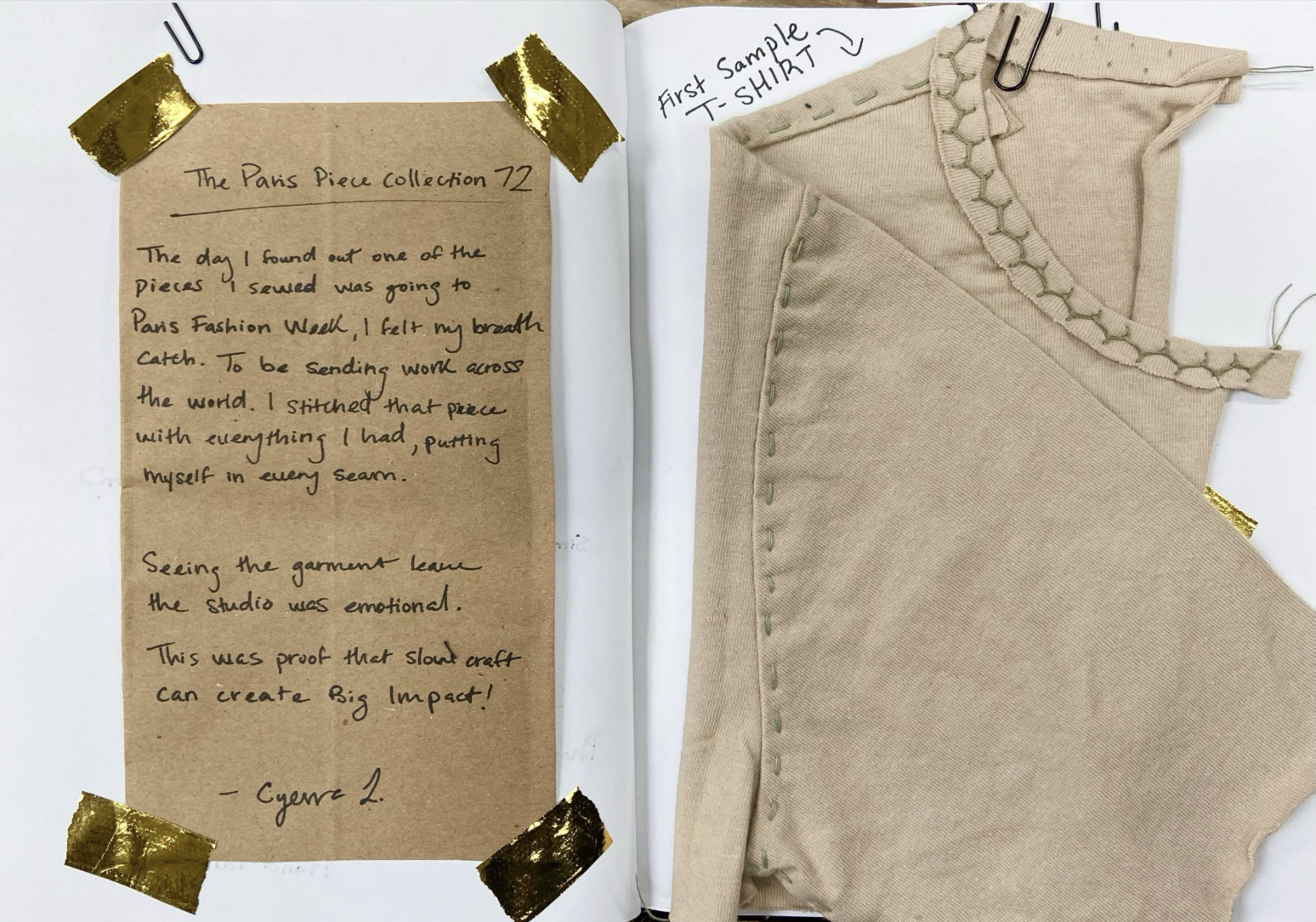
That sentence says so much in so few words. It speaks to the power of local production, the value of human labor, and the idea that small, intentional work can still reach the global stage without sacrificing integrity.
Perhaps the most meaningful part of Cyerra’s story is where it led.
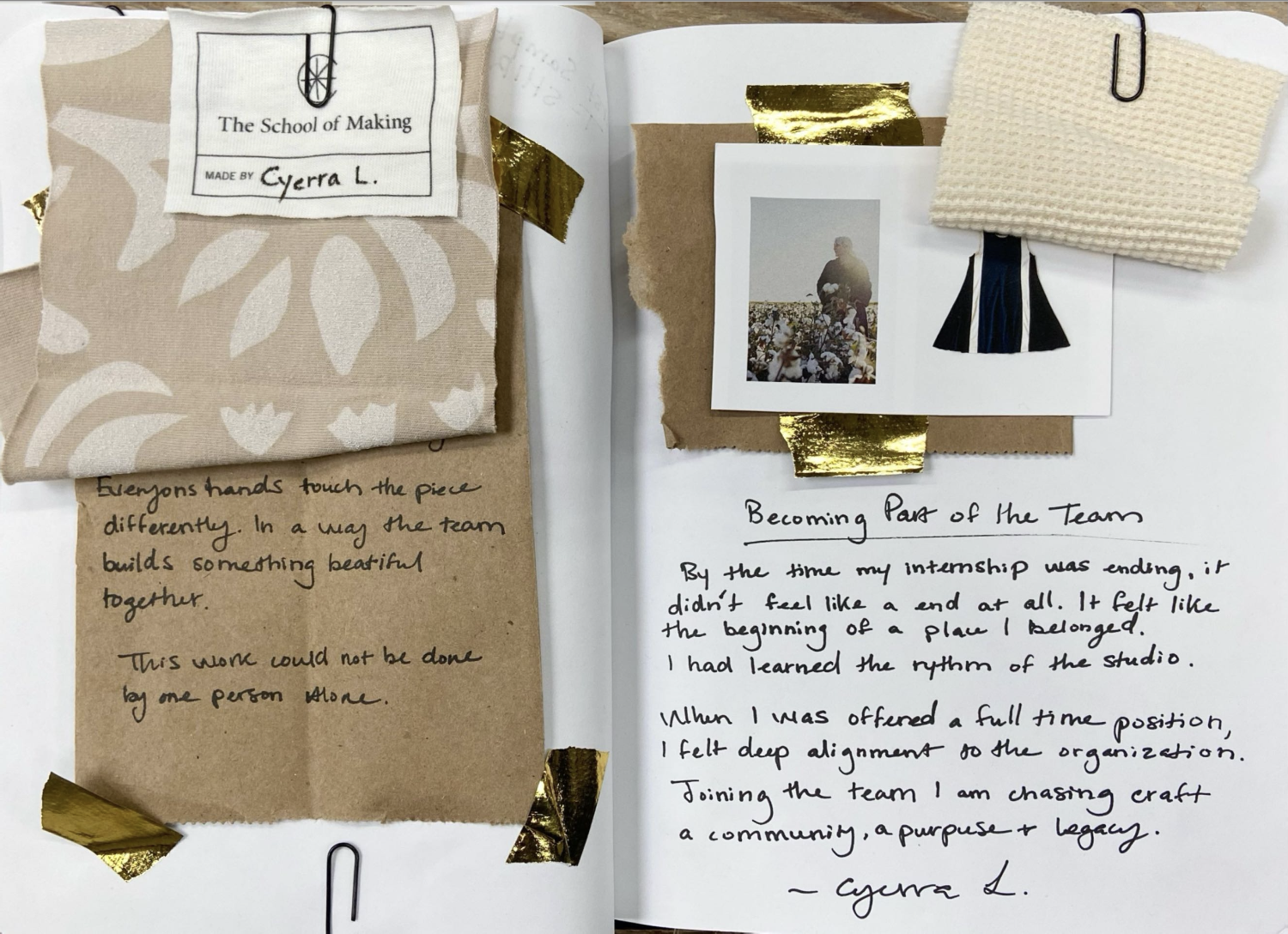
By the end of the three-month training, the studio no longer felt temporary. It felt like home. In one of the final pages of her journal, she wrote:
“By the time my internship was ending, it didn’t feel like an end at all. It felt like the beginning of a place I belonged.”
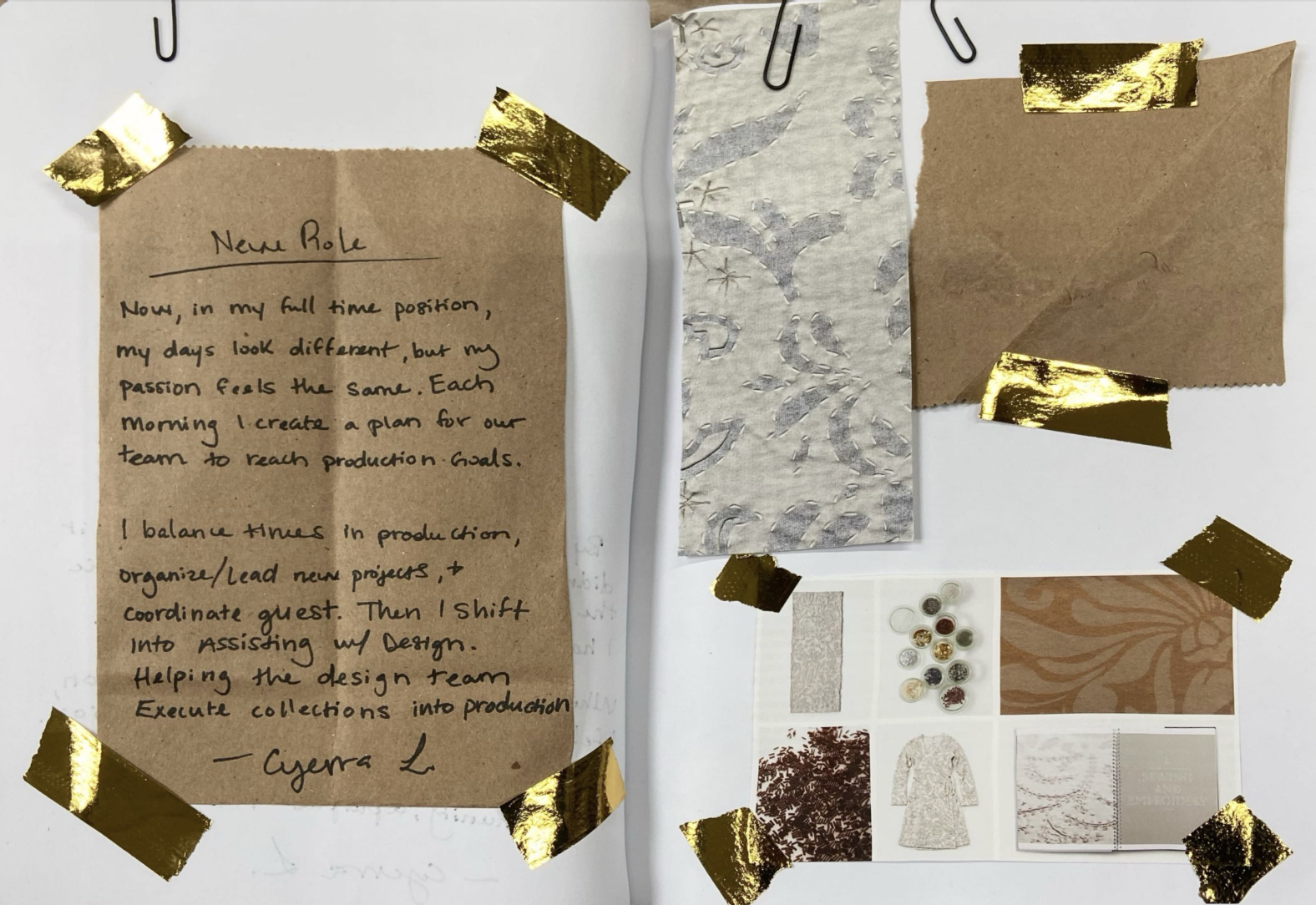
When she was offered a full-time role, she described it as a moment of deep alignment:
“Joining the team I am chasing craft, a community, a purpose + legacy.”
We could not be more proud.
Cyerra’s story is exactly why Closely Crafted does this work.
When we invest in makers, we invest in continuity. We invest in local economies, intergenerational knowledge, and the future of American fashion. We create the conditions for craft not only to survive, but to be chosen, practiced, and passed on.
This opportunity was about more than training. It was about building a bridge between education and employment, between aspiration and access, between heritage and what comes next.
We are so honored to have played a small part in Cyerra’s journey, and we are deeply grateful to Project Threadways and Alabama Chanin for creating the kind of environment where this growth could happen.
Thank you for being part of a community that believes this work matters.
We’ll be sharing pages from Cyerra’s journal and more from her experience on Instagram this week. Follow along as we continue highlighting the people and pathways shaping the future of American craft.
With gratitude,
The Closely Crafted Team